Walmart learning
Transforming Learning From Compliance to Growth
TL;DR
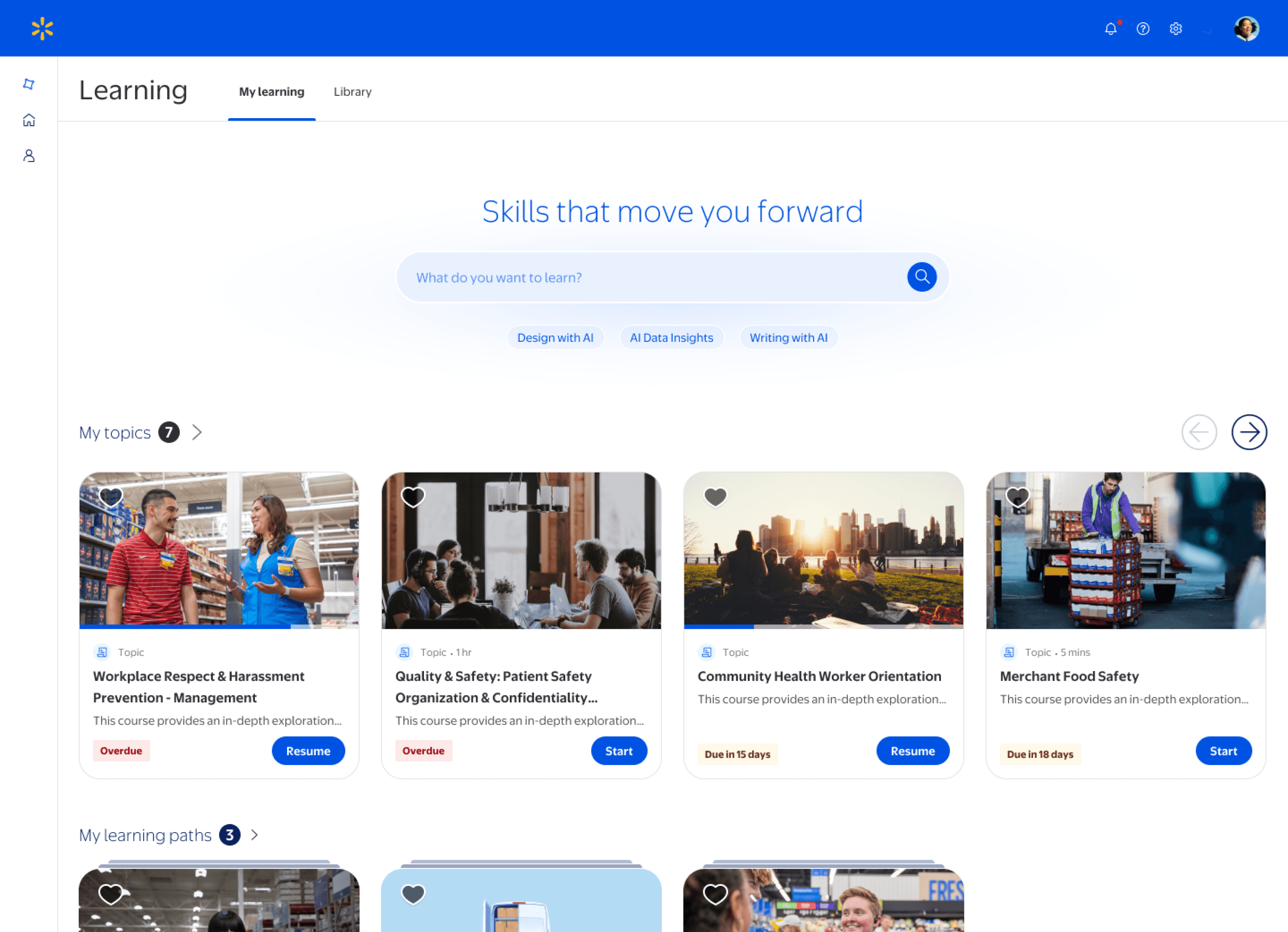
Redesigning Walmart's learning experience to help associates prioritize training, discover growth opportunities, and navigate learning more intuitively.
ROLE
Lead UX Designer
TIMELINE
CATEGORY
SERVICES
User Research · UX Strategy · Product Design
Background
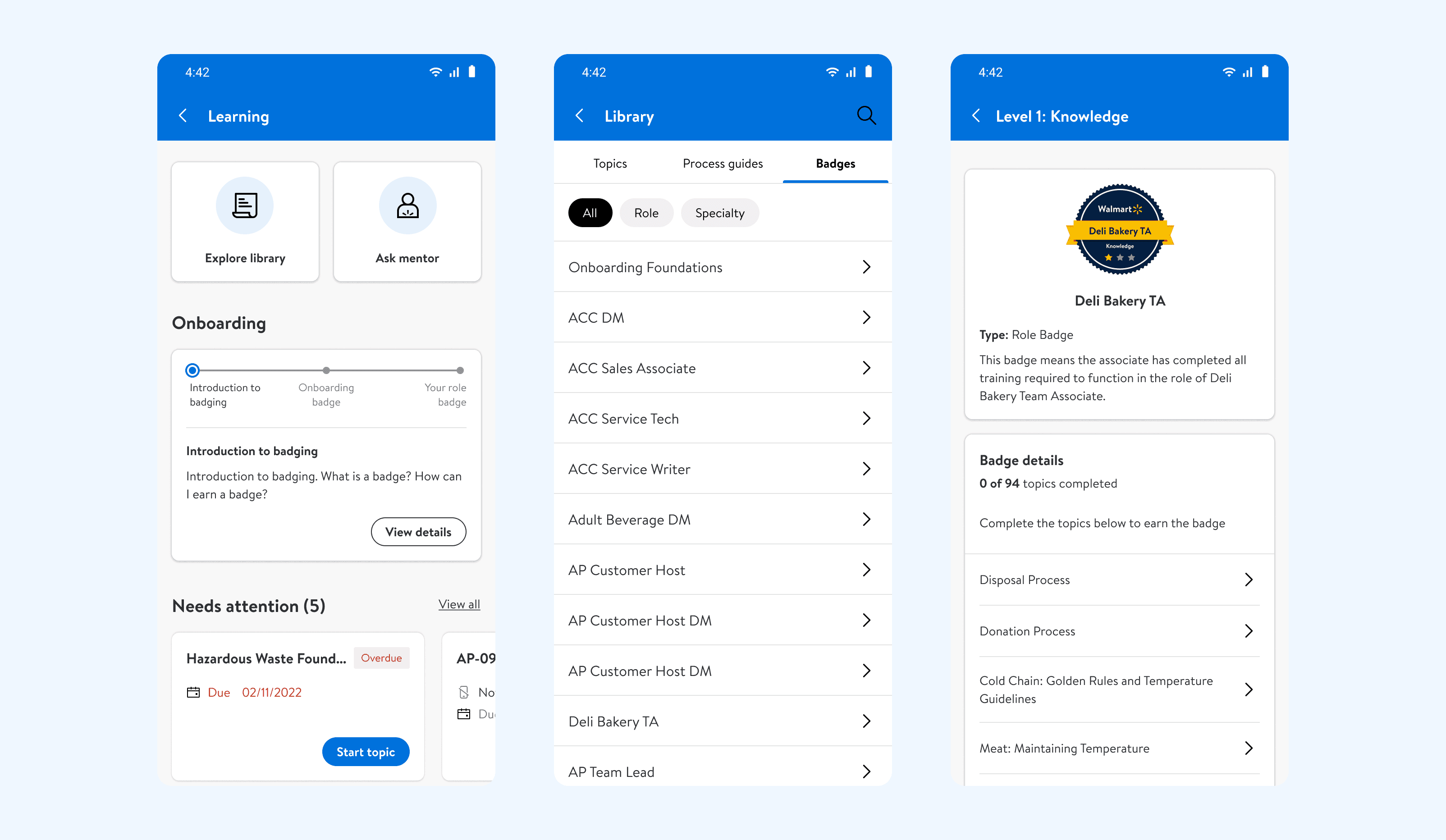
Walmart was preparing to sunset legacy learning platforms and consolidate learning into a unified experience.
However, learning was fragmented across multiple systems, making it difficult for associates to understand where learning lived, what training mattered most, and how learning connected to career growth.
As a result, learning was often viewed as a compliance task rather than a tool for development.
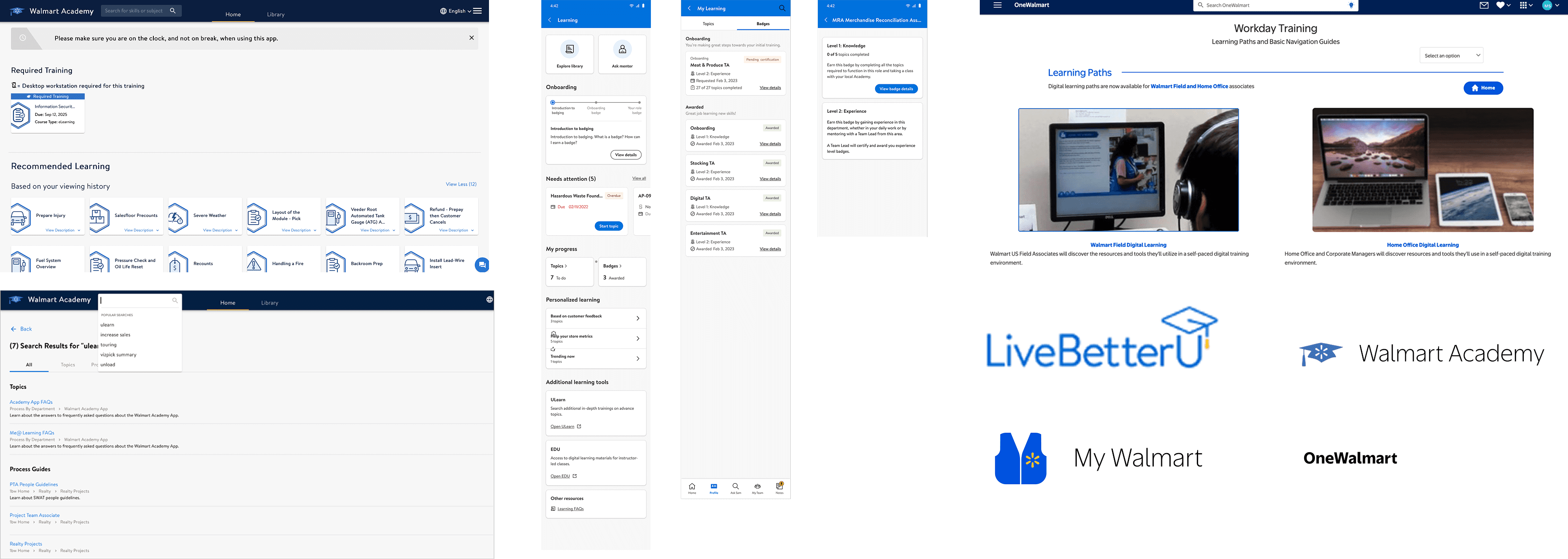
Legacy learning platforms
“There are too many places to go, and I'm never sure which one is right.”
The Challenge
At first, the problem appeared to be platform fragmentation.
Research revealed something deeper:
Learning experiences were disconnected from how associates actually worked, learned, and developed.
Field associates needed fast, role-based learning support, while Home Office associates were more focused on long-term skill and career development.
The challenge evolved from consolidating learning systems to designing an experience that supported both immediate learning needs and future growth.
Research
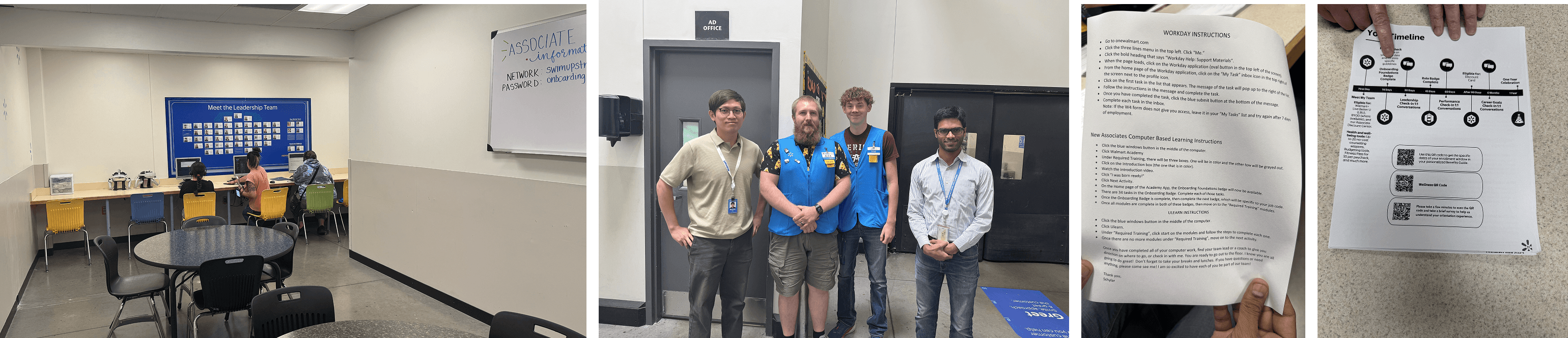
Methods
Store visits
Associate interviews
Manager & People Lead interviews
Usability testing
AI perception research
What We Learned
Learning was viewed as a task to complete.
Most associates focused only on required training.
Operational realities shaped learning behavior.
Store associates had limited uninterrupted learning time and often needed quick access to information.
Users needed prioritization.
Many struggled to understand what to complete first.
Discoverability was a bigger issue than content availability.
Features like Search, Library, and Badges were often overlooked.
AI was welcomed when it reduced friction.
Users wanted guidance and recommendations, not automation for its own sake.
Experience Strategy
Research revealed that associates approached learning through two distinct mindsets:
I need to complete something.
or
I want to learn something.
The existing ecosystem was organized around platforms and internal structures, forcing users to navigate multiple systems and unclear categories.
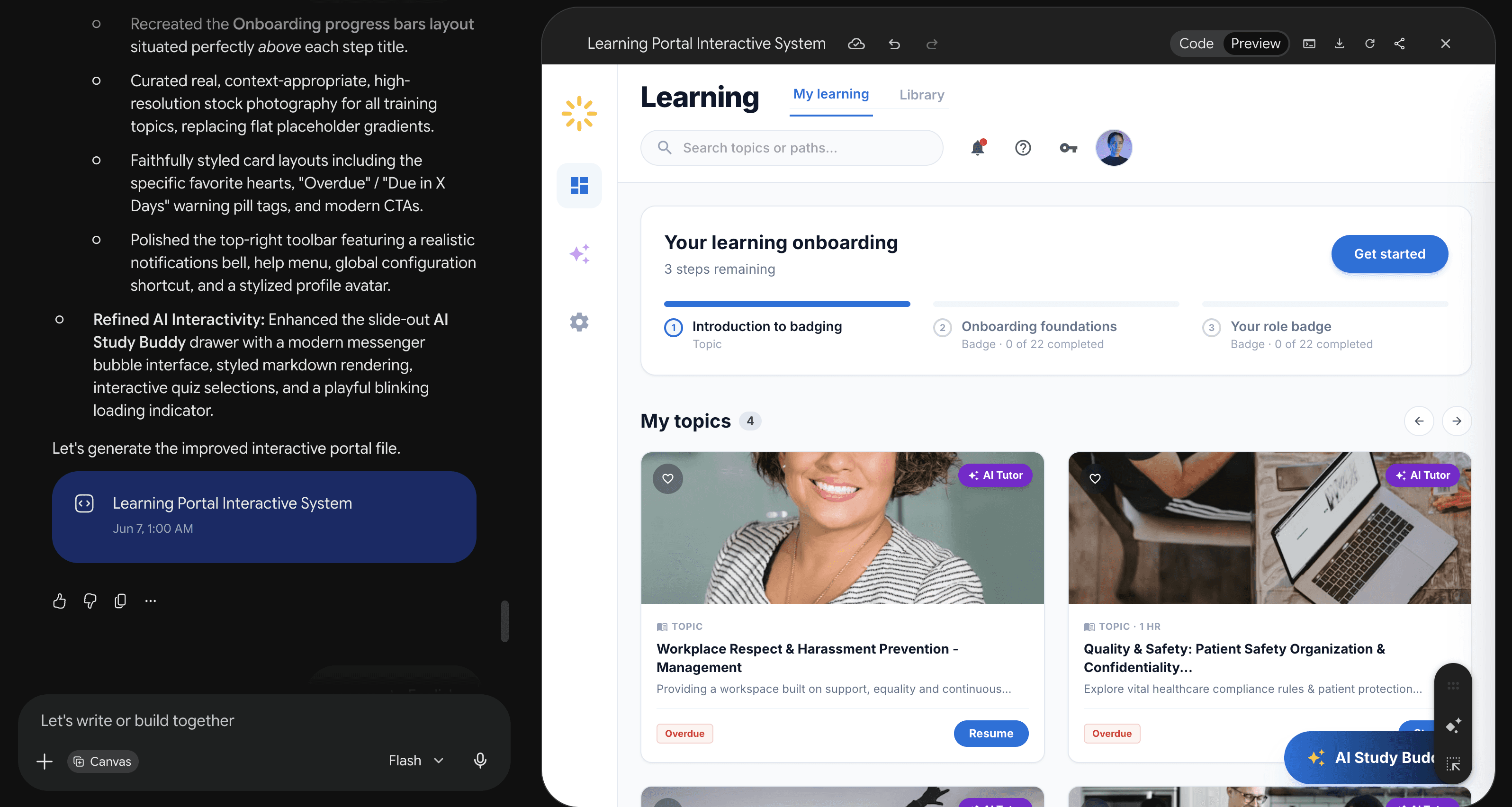
AI rapid prototyping
To accelerate early exploration, I incorporated AI-assisted sketching and prototyping into the ideation process.
Rather than generating final designs, AI was used to quickly visualize alternative approaches, challenge assumptions, and facilitate discussions with stakeholders.
Solution
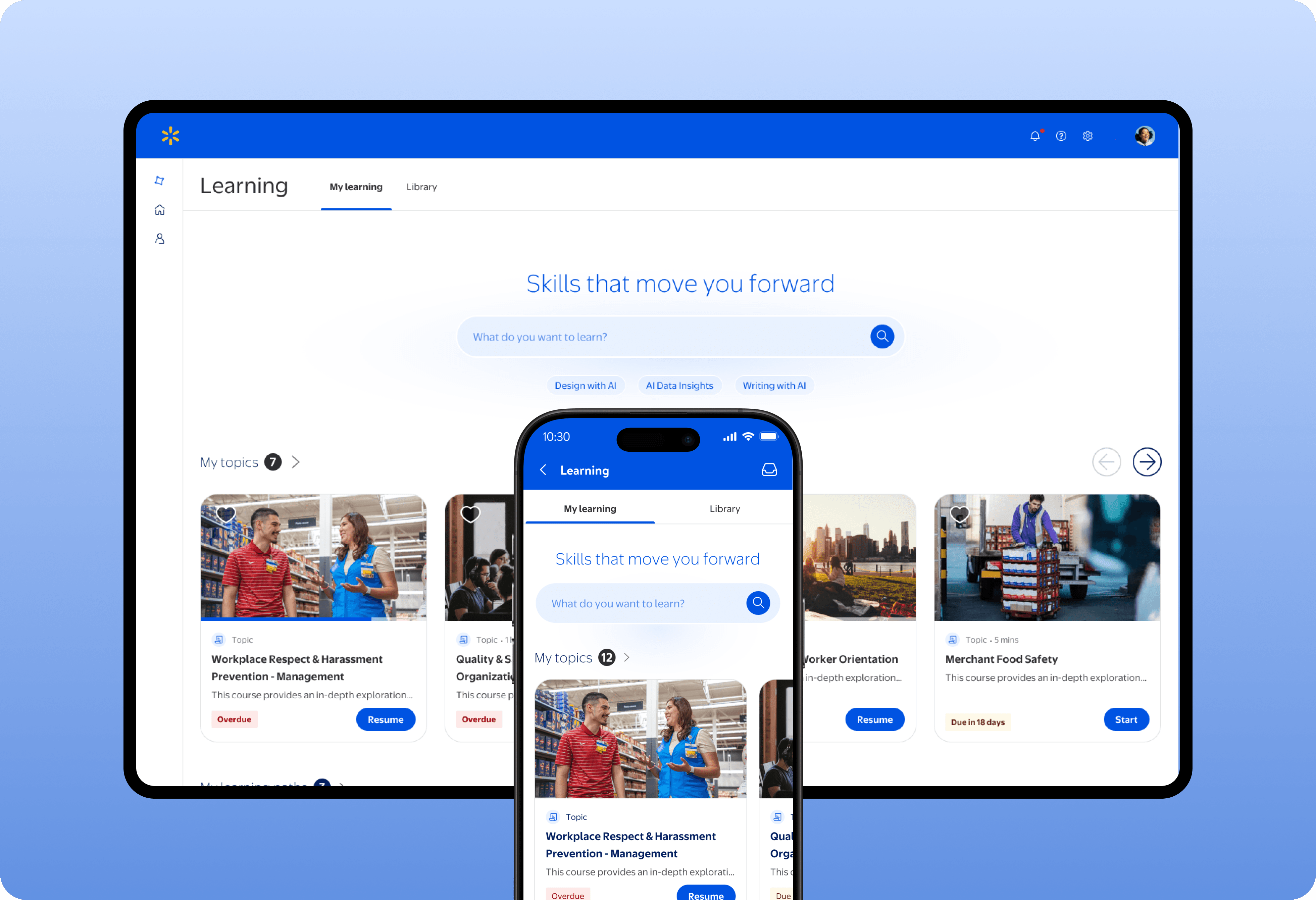
Unified Learning Experience Across Devices
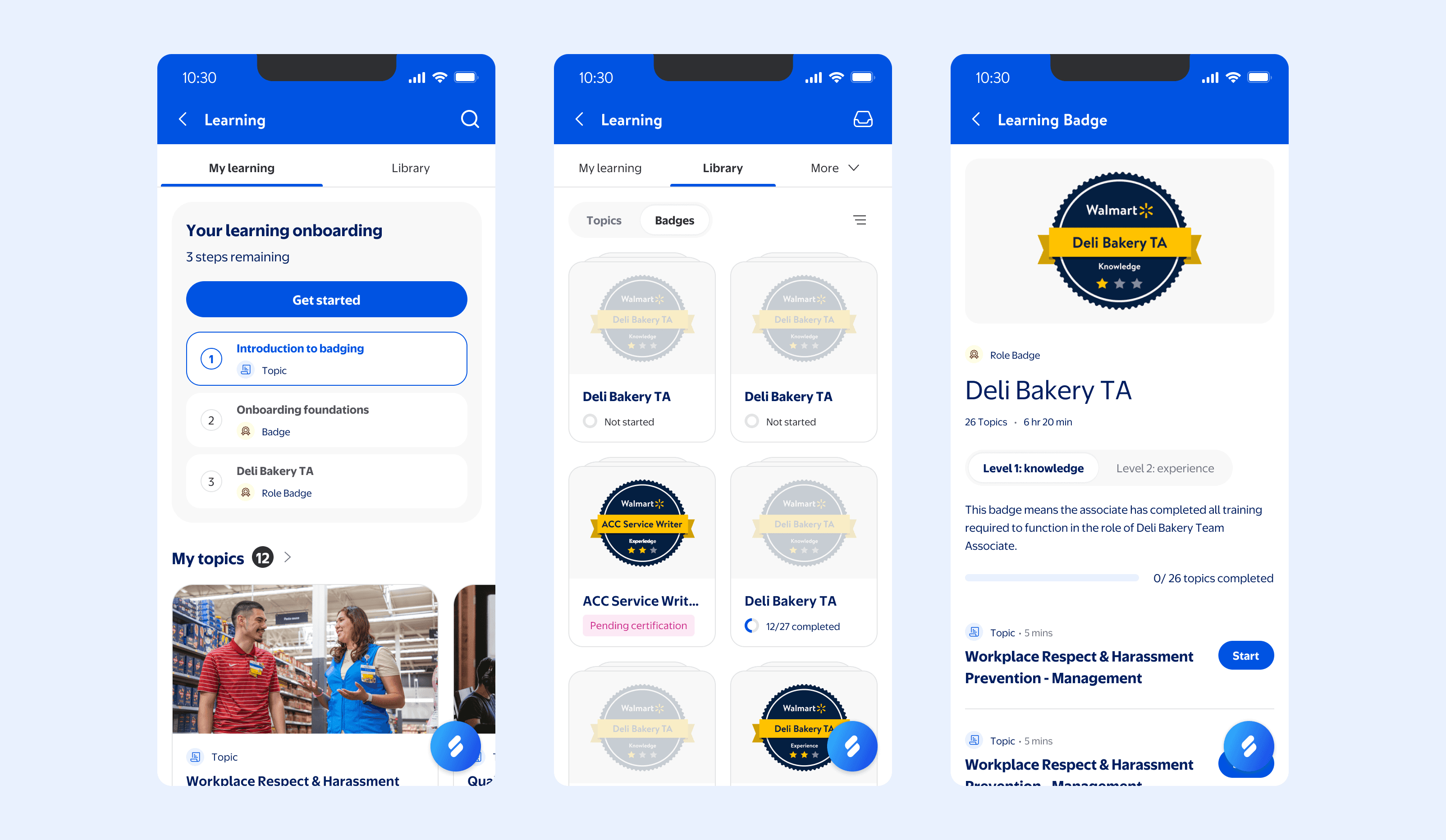
Associates complete most structured learning on desktop in the backroom, while mobile supports quick, on-the-job learning in the field. I designed a unified, responsive experience that maintains consistency across devices while adapting to each context of use.
Solution
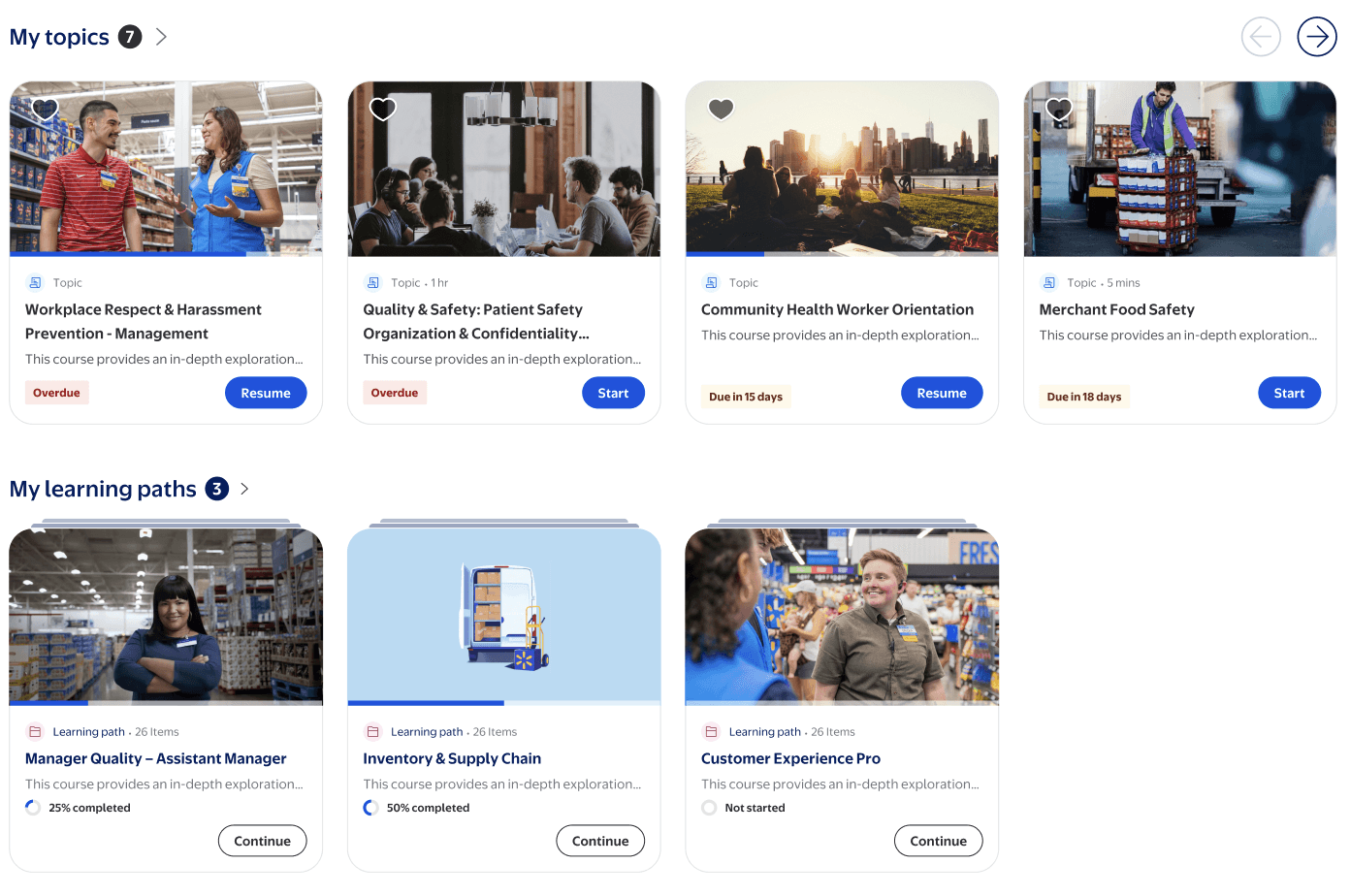
Prioritized learning
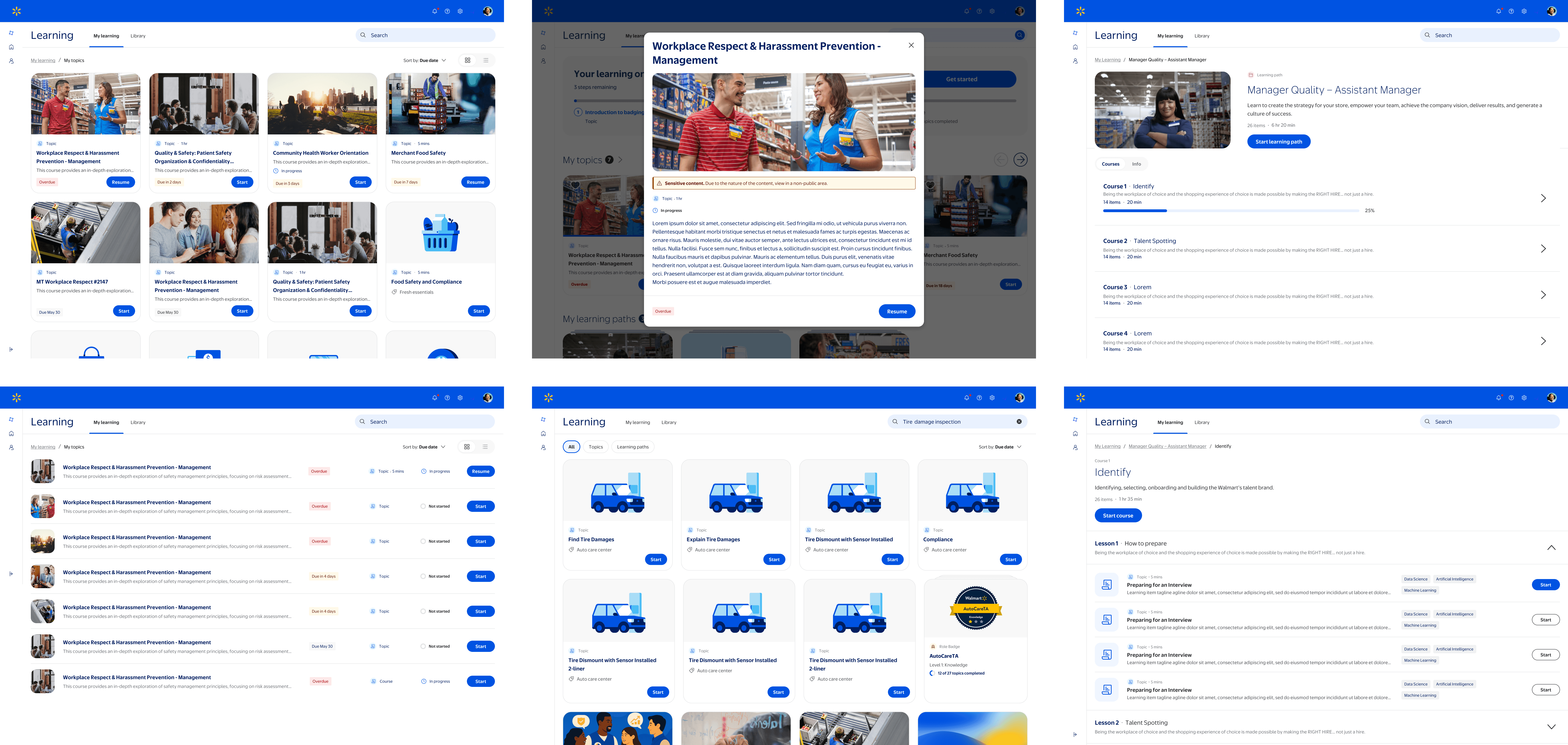
Research showed that associates felt overwhelmed by onboarding content and struggled to prioritize learning. To reduce decision-making effort, I reorganized learning around urgency and progress, surfacing overdue, due-soon, and in-progress content, learning path progress, and personalized recommendations. This helps associates quickly identify what to learn next.

Legacy categorization
Solution
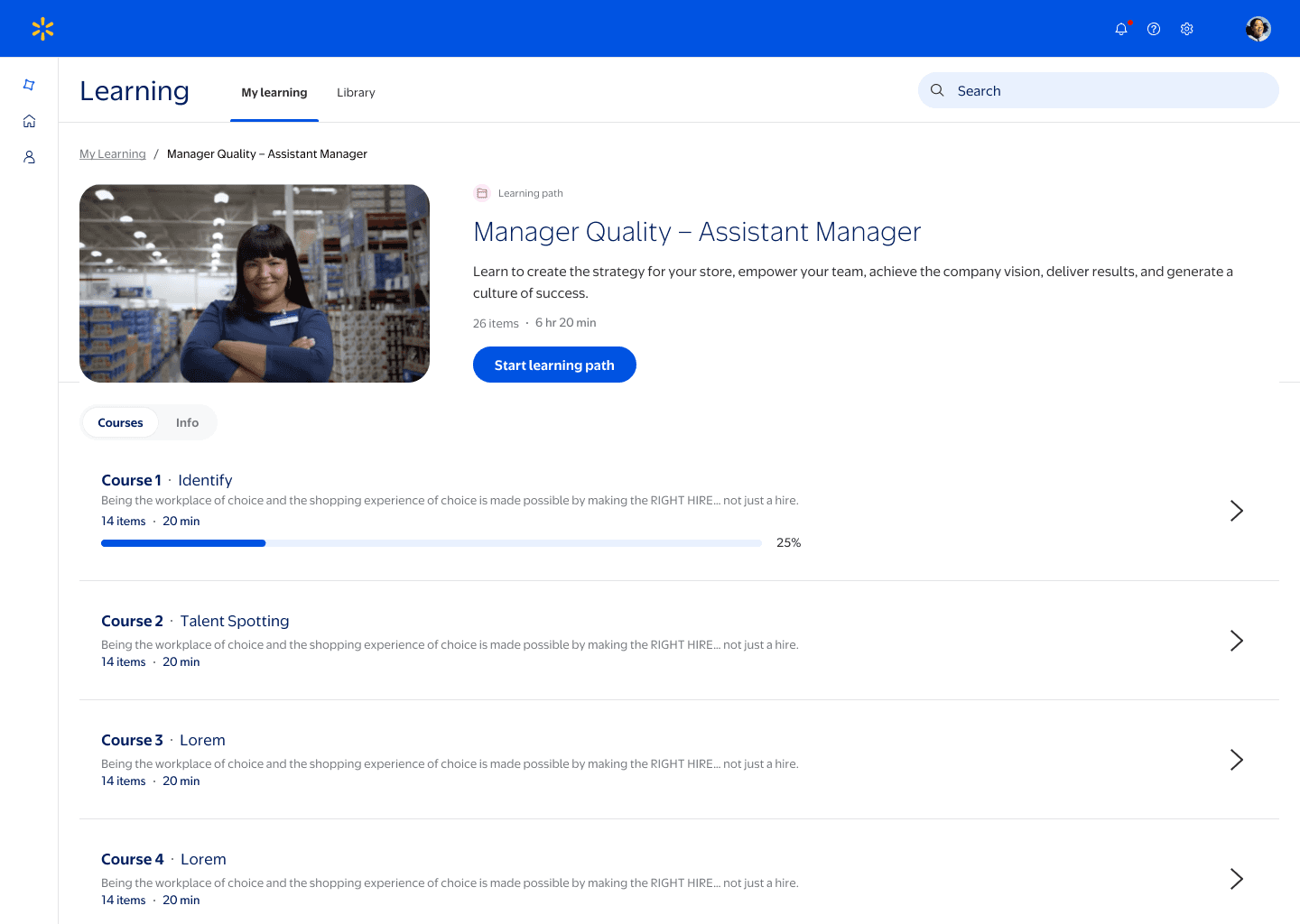
Clear Learning Structure
Research revealed confusion around topics, learning paths, and badges, making it difficult for associates to understand their development journey. I established a clear learning hierarchy and dedicated badge experience that connects daily learning activities to role mastery, certifications, and career growth opportunities.
Solution
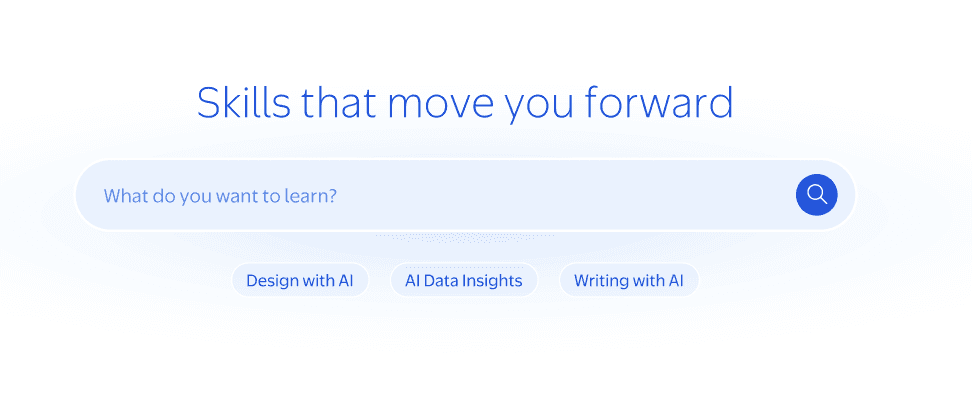
Search-Driven Discovery
Many associates were unaware of learning resources beyond assigned training. By placing search at the top of the experience and supporting it with suggested topics and recommendations, I made learning easier to discover, explore, and access on demand.
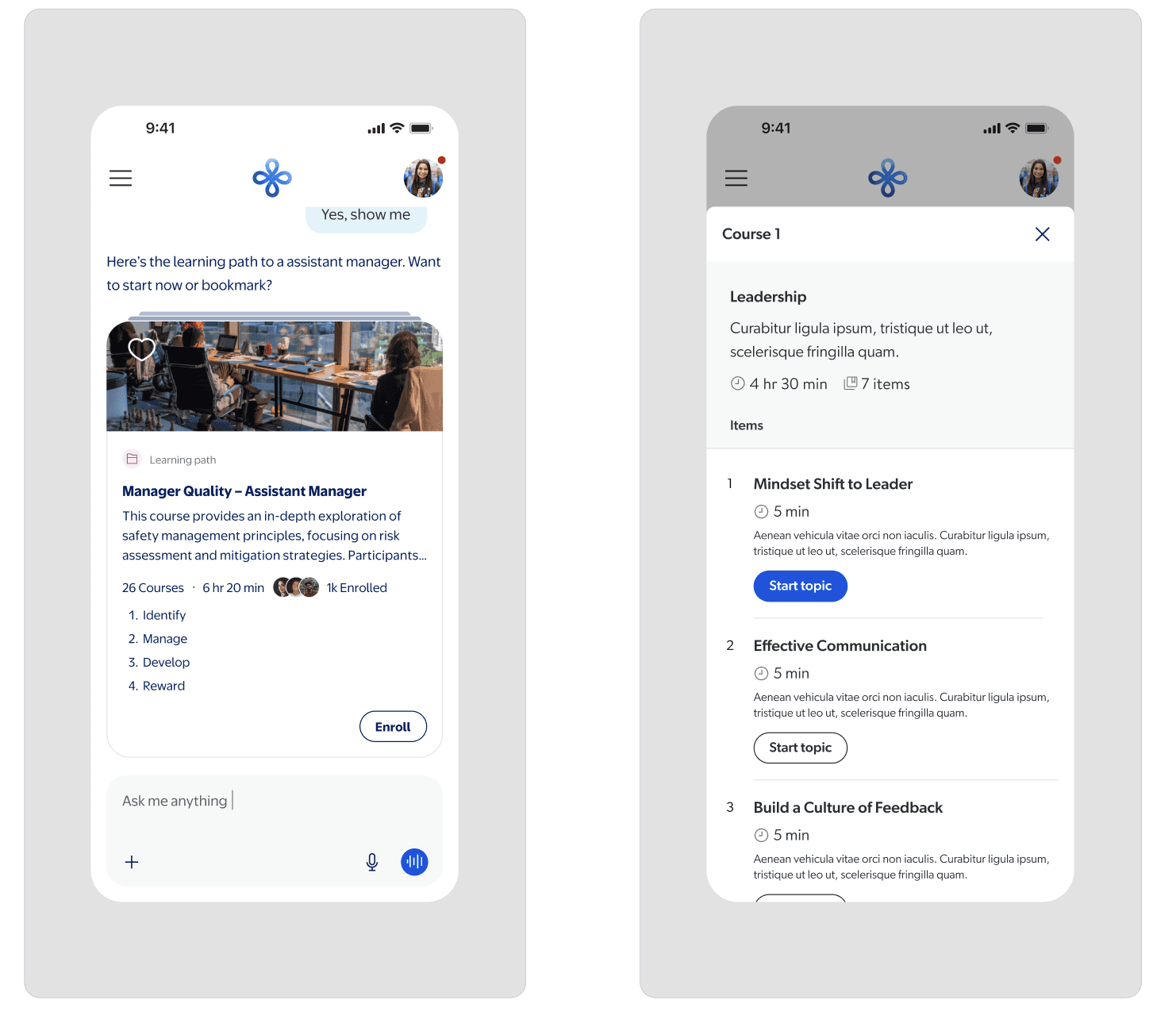
AI-Assisted Experiences
AI concepts explored:
Personalized recommendations
Learning summaries
Intelligent guidance
Contextual support
The goal was not to replace exploration, but to reduce friction and increase confidence.
Designing for Different Learning Needs
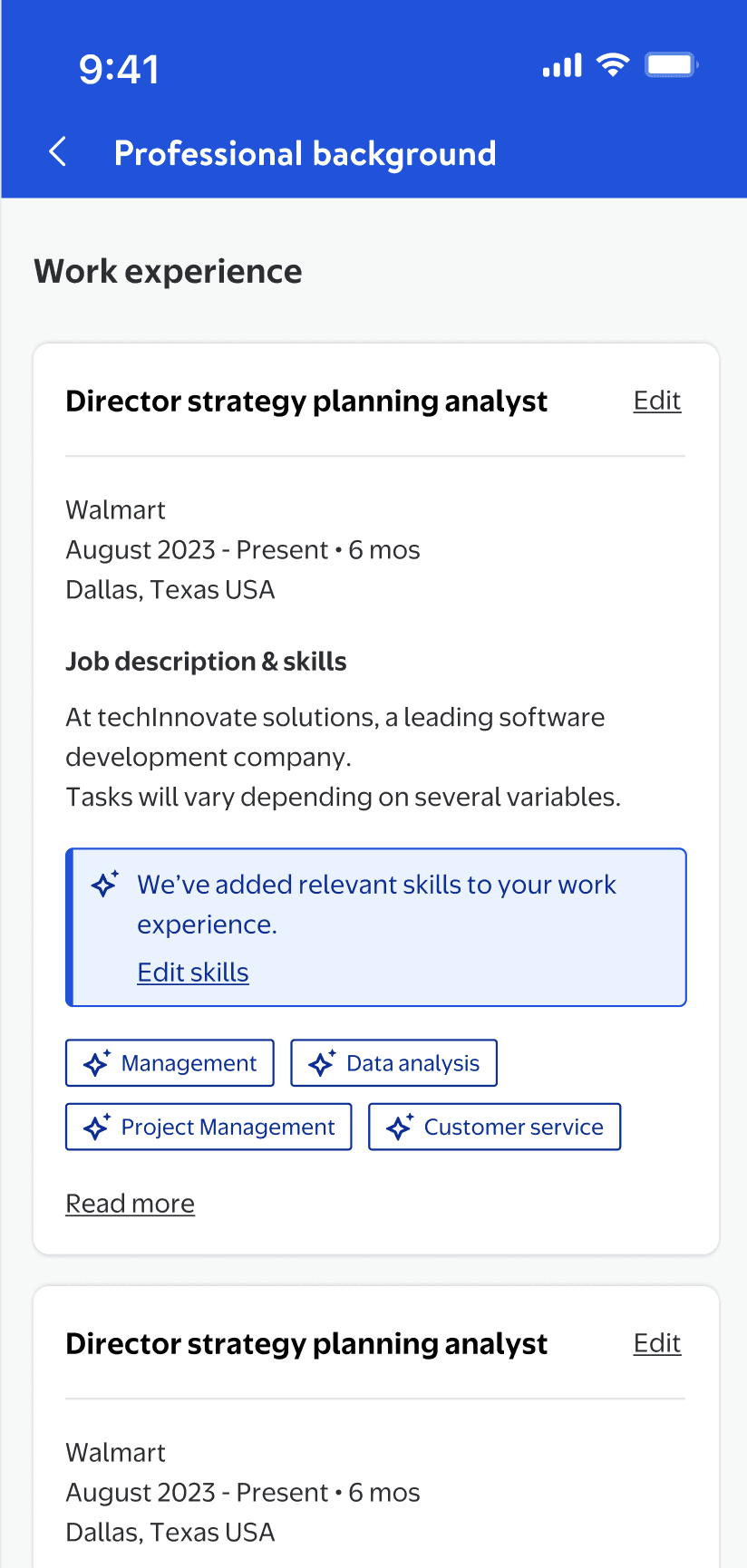
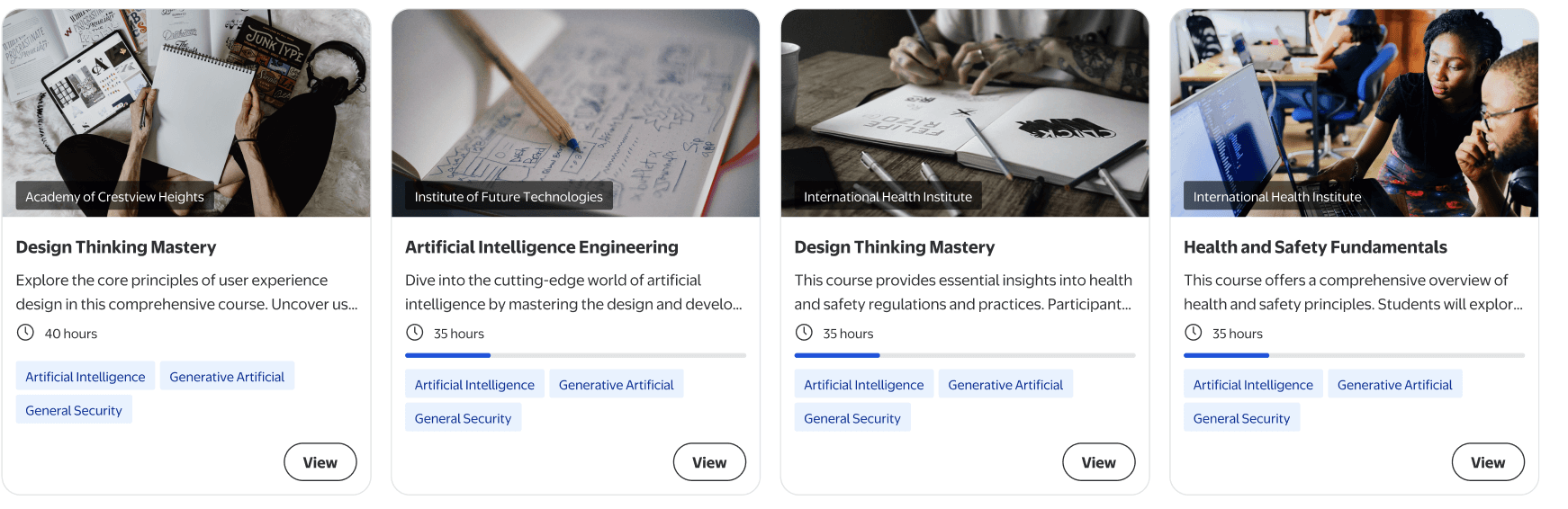
As the strategy evolved, learning became connected to a broader skills vision.
By combining:
Work experience
Learning history
AI-inferred skills
the platform could support:
Personalized recommendations
Career development
Internal mobility
Talent growth
The opportunity extended beyond training completion toward continuous skill development.
Looking Ahead: A Skills Ecosystem
As the strategy evolved, learning became connected to a broader skills vision.
By combining:
Work experience
Learning history
AI-inferred skills
the platform could support:
Personalized recommendations
Career development
Internal mobility
Talent growth
The opportunity extended beyond training completion toward continuous skill development.
Reflection
This project taught me that enterprise learning challenges are rarely just UX problems.
They are behavioral, operational, and organizational challenges.
Designing for millions of associates required balancing immediate training needs with long-term workforce development.
Learning shouldn't stop at completion. The most valuable experiences help people build skills, confidence, and a path toward future growth.